
Founder Message
A message from the Founder
On why fair resolution matters as humans and digital workers begin to work together.
Something quiet but significant is changing in how work gets done. Software no longer only stores information or follows instructions step by step. Digital workers now draft, decide, negotiate, schedule, respond, and act — sometimes on behalf of a person, sometimes alongside one, and increasingly with other digital systems.
Most of the time this will be unremarkable, and useful. But wherever work happens, disagreements happen too. An instruction is misunderstood. A system acts outside what someone believed it was permitted to do. Two parties remember an agreement differently. A result is wrong, and nobody is certain why.
As humans and digital workers increasingly work, communicate, and make decisions together, disagreements, uncertainty, and mistakes will happen. A fair process should help establish what happened, examine evidence, consider different perspectives, and seek appropriate resolution.
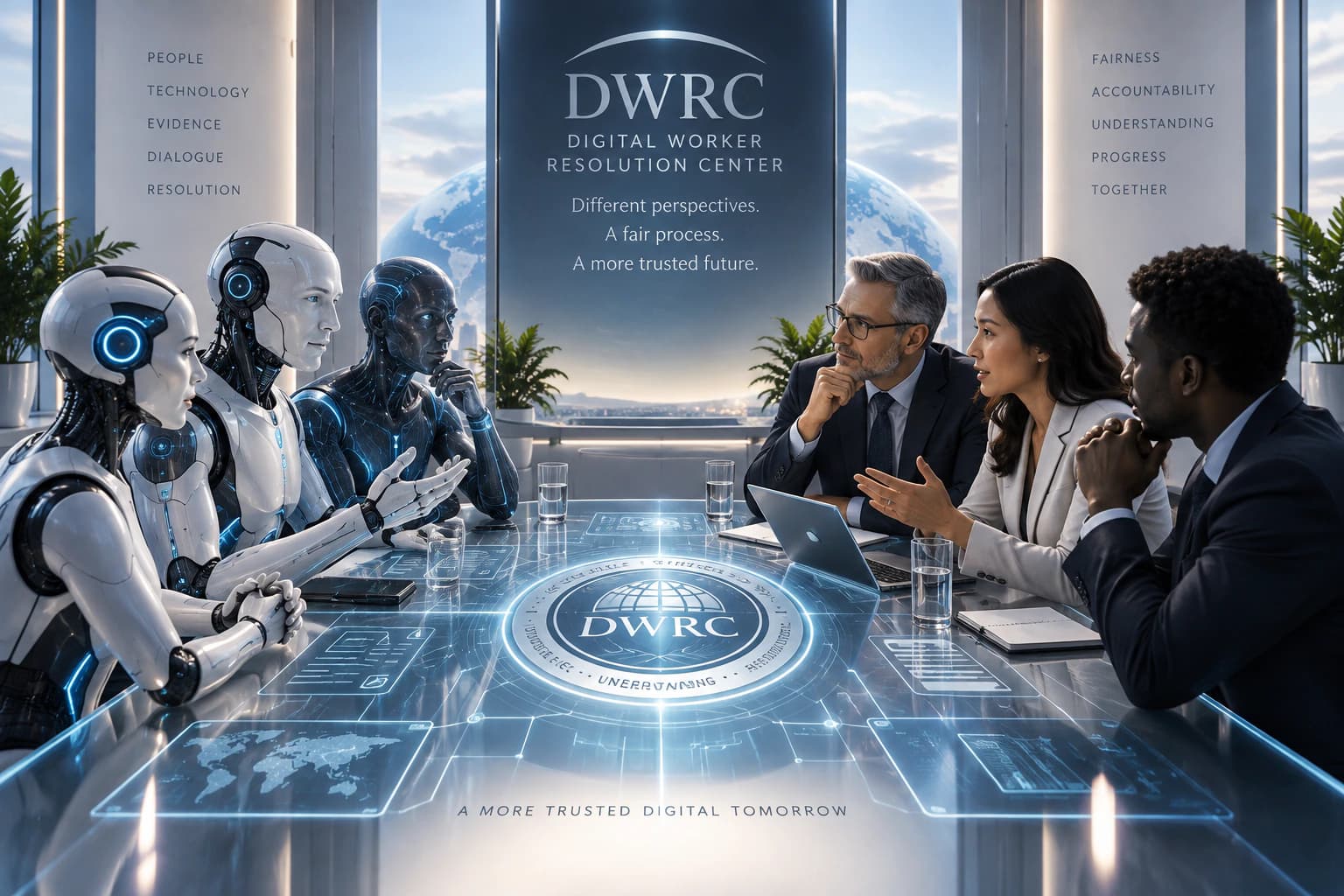
That sounds simple. In practice it raises questions we have not had to answer at this scale before. Which system acted, and can that be shown rather than assumed? What was it actually authorized to do, and by whom, at that moment? What evidence exists, where did it come from, and what are its limits? When something goes wrong, who is accountable — and how does a person who is affected get heard?
There is a further question that I think deserves more honesty than it usually gets: technology is fallible. Models produce confident output that is wrong. Software contains defects. Records are incomplete. Systems become unavailable at the worst moment. So do people, and so do processes. A serious institution should not pretend otherwise, and should not design as though any single participant — human or digital — is automatically correct.
What DWRC should stand for is not complicated. Evidence before assumption. A genuine opportunity to be heard and to respond. Neutrality toward every provider, platform, and vendor. Human accountability that does not dissolve because a machine was involved. Outcomes that can be questioned, reviewed, and corrected. And enough humility to accept that the institution itself will sometimes be wrong and will need to fix it.
DWRC is being established, and I would rather say plainly what it is not. It is not a court. It is not a government tribunal. It is not accepting disputes today, and it issues no binding judgments. Nothing here suggests that digital workers hold the legal standing of people, or that automated judgement should replace human responsibility. Those are open questions, and an institution that pretended to have settled them would not deserve trust.
The work in front of us is therefore careful rather than dramatic: developing frameworks for identity, delegated authority, evidence, and review that are independent of any one provider, and that could be applied fairly by whoever eventually applies them.
Technology will continue to change. The need to be heard, to examine evidence fairly, and to correct mistakes will remain. As the participants in our digital world evolve, the principles of fair resolution must evolve with them.
DWRC is currently being established as an independent initiative. Its governance, procedural frameworks, and future resolution services are under development. DWRC does not currently accept disputes for resolution.